White label vs private label cosmetics: if you are planning to launch a beauty brand or expand an existing range, choosing the right manufacturing model is one of the first and most consequential decisions you will make. The three terms (white label, private label, and custom OEM) are used interchangeably across the industry, but they describe meaningfully different production arrangements with different implications for speed, cost, exclusivity, and control over your product.
This white label vs private label cosmetics guide explains what each model means in practice, and how to decide which is the right route for your brand: based on your timeline, budget, target market, and whether formula exclusivity matters commercially.
Table of Contents
The Three Models: Definitions
Before comparing them, it helps to have clean definitions. Here is what each term means in a manufacturing context:
White Label Cosmetics
White label cosmetics are products manufactured from a supplier’s existing, pre-tested formula catalogue. The manufacturer produces the formula; you apply your brand’s label and packaging. The formula is not exclusive: other brands may purchase and sell the same formulation under their own label. Speed and cost efficiency are the primary advantages. You skip formula development entirely and move straight to packaging, branding, and launch.
Private Label Cosmetics
Private label cosmetics follow the same basic model: you brand products from the manufacturer’s existing formula catalogue, but the term often implies a closer commercial relationship, sometimes including minor formula adjustments (fragrance, colour, texture), more tailored packaging options, or a degree of exclusivity within a specific market or retail channel. In practice, the operational difference between white label and private label is small. Both models start from the manufacturer’s existing formulations. The distinction is more commercial than technical.
Custom OEM Formulation
OEM stands for Original Equipment Manufacturer. In cosmetics, custom OEM means the manufacturer develops a formula specifically for your brand, from scratch, to your specification. You own the intellectual property, the formula is exclusive to your brand, and it cannot be sold to other clients. The trade-off is time and cost: custom development adds 4–8 weeks of R&D and stability testing before production can begin, and upfront development costs are higher than white or private label.
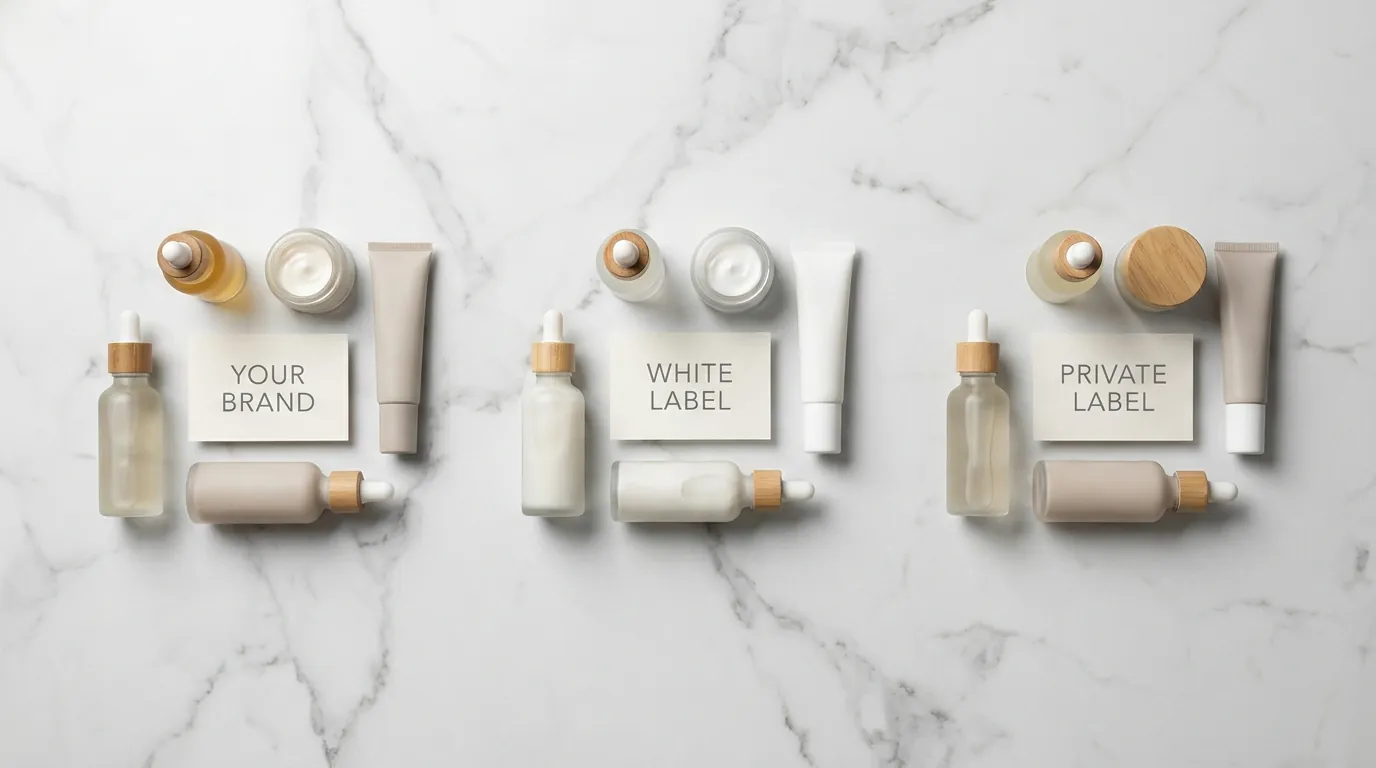
White Label vs Private Label: Is There Actually a Difference?
This is the most common source of confusion in cosmetics manufacturing, and the honest answer is: not much, at least not operationally.
Both white label and private label cosmetics draw from the manufacturer’s existing formula library. Both models involve you selecting a formula, applying your brand’s packaging and labelling, and going to market. The formula in both cases belongs to the manufacturer, not to you. The same formula may be sold to multiple brands.
Where a meaningful difference can exist:
- Customisation depth: Private label arrangements sometimes include minor formula adjustments changing the fragrance, adding a branded active ingredient at a low concentration, adjusting colour or viscosity. True white label is typically off-the-shelf with no modification.
- Exclusivity: Some private label agreements include territorial or channel exclusivity: the manufacturer agrees not to sell the same formula to a direct competitor in your market. White label is generally non-exclusive by definition.
- Branding depth: Private label often involves more manufacturer involvement in packaging design and label development. White label is closer to a commodity transaction.
In reality, different manufacturers use these terms differently. One supplier’s “private label” is another’s “white label”. When evaluating a manufacturer, the questions that matter are: Is the formula exclusive to me? Can I adjust it? What documentation and certifications come with it? The label on the service matters less than the answers to those questions.
When White Label or Private Label Is the Right Choice
The white label and private label route makes the most sense when: you need to launch quickly, within weeks rather than months; you are testing a new product category and want to validate demand before committing to custom development; formula exclusivity is not commercially important because your brand differentiation comes from marketing and distribution rather than a unique formula; you are a retailer or distributor adding a house brand to an existing portfolio; or your budget does not currently support the higher upfront cost of custom development.
Custom OEM Formulation: When You Need Something Unique
Custom OEM formulation is the right choice when the formula itself is part of your brand’s competitive advantage, when what is inside the product is as important as what is on the label.
Brands built around a specific active ingredient, brands making specific performance claims that require a formula engineered to deliver them, and brands in regulated or professional channels where formula uniqueness is a credibility signal all have genuine reasons to invest in custom development. Custom OEM is also appropriate when you intend to scale and protect your product over time. If your formula is exclusive, a competitor cannot simply go to the same manufacturer and order the same product. With white or private label, they can, and in competitive categories, this matters.
What Custom OEM Formulation Involves
A custom formulation project starts with your brief: target texture, key actives, performance claims, target market, and reference products. The manufacturer’s R&D team develops a prototype, which you evaluate and iterate until approved. In parallel, stability testing and safety assessment are completed to EU regulatory standards. Only then does full production begin.
Realistic timeline from brief to finished goods: 8–14 weeks. For brands with a hard launch date, this timeline needs to be planned backwards from the deadline, not treated as something to compress when it becomes inconvenient. Stability testing in particular cannot be shortened without compromising the validity of the data.
The IP Question
Formula intellectual property is the clearest dividing line between OEM and white or private label. With custom OEM, the formula is yours. The manufacturer cannot sell it to another client. You can change manufacturers and take the formula with you (subject to contract terms). This is a genuine commercial asset, particularly for brands in premium or professional markets where the formula is part of the product story.
With white or private label, the IP stays with the manufacturer. If you change supplier, you change formula which means reformulating or risking product inconsistency. For most consumer brands, this is an acceptable trade-off. For brands where the formula is central to the value proposition, it is not.
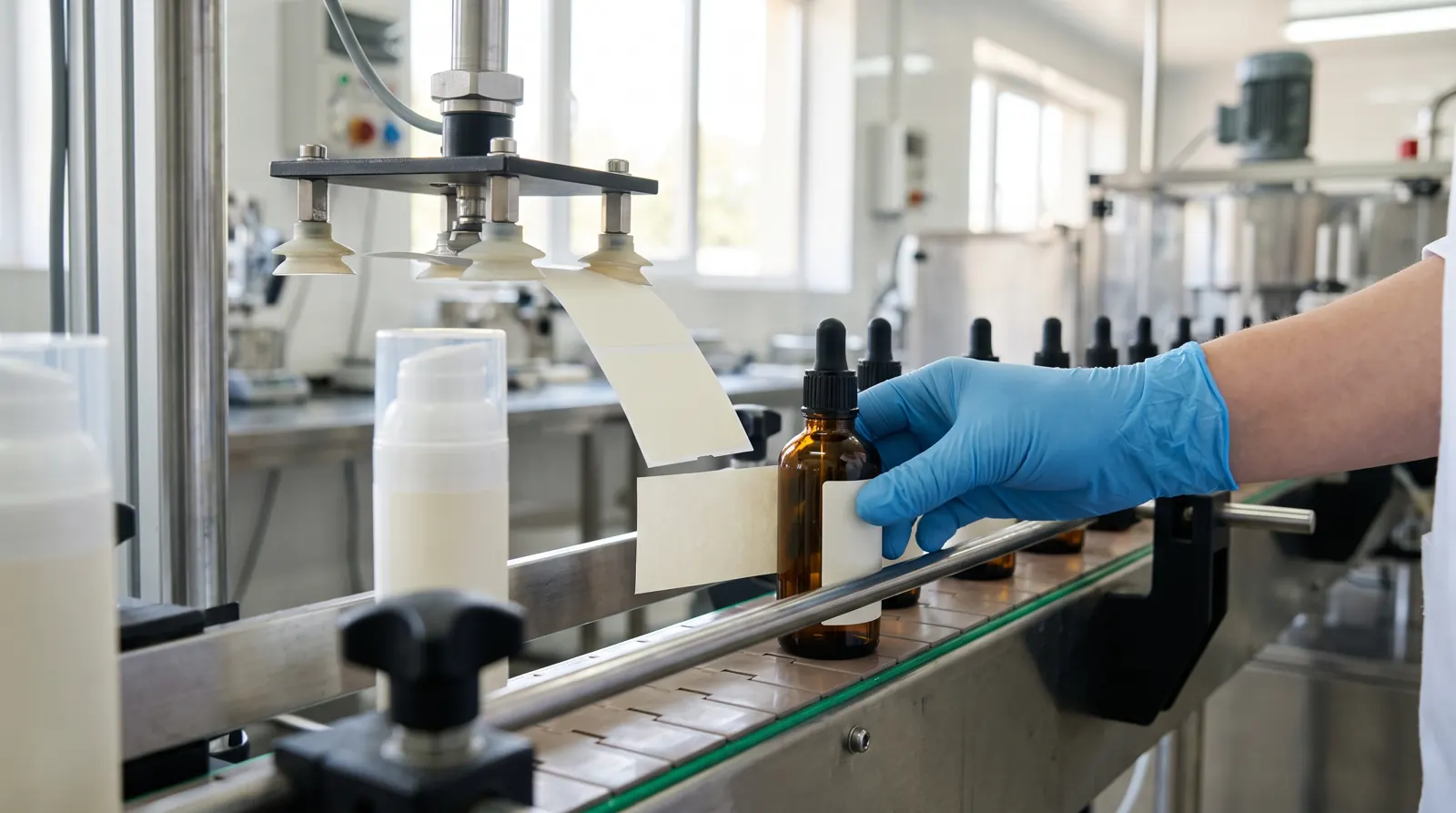
Side-by-Side Comparison: All Three Models
The table below summarises the key differences across all three manufacturing models across the dimensions that most affect a brand’s launch strategy:
| Factor | White label | Private label | Custom OEM |
|---|---|---|---|
| Formula origin | Manufacturer’s existing catalogue | Manufacturer’s existing catalogue (minor adjustments possible) | Developed from scratch to your spec |
| Formula exclusivity | Non-exclusive | Sometimes semi-exclusive by market or channel | Fully exclusive |
| IP ownership | Manufacturer | Manufacturer (usually) | Your brand |
| Customisation | Minimal label and packaging only | Limited fragrance, colour, minor actives | Full texture, actives, claims, format |
| Time to first sample | 1 week | 1–2 weeks | 4–8 weeks |
| Time to finished goods | 4–6 weeks | 4–8 weeks | 8–14 weeks |
| Upfront cost | Low | Low–medium | Medium–high |
| MOQ (typical) | 1,000 units | 1,000 units | 1,000 units |
| Best for | Fast launch, range testing, cost efficiency | Branded house ranges, retail house brands | Unique positioning, IP-driven brands, professional channels |
| Formula portable to new manufacturer | No | No (usually) | Yes (subject to contract) |
One factor not shown in the table: regulatory documentation. All three models, when manufactured by an EU-certified facility, produce the same core export documentation package: Certificate of Analysis, MSDS/SDS, Free Sale Certificate, and Product Information File. The regulatory standing of the finished product does not depend on which manufacturing model you chose.
Which Model Is Right for Your Brand?
The right model depends on four factors: timeline, budget, the commercial importance of formula exclusivity, and your brand’s stage of development.
Choose White Label or Private Label if:
- You need to launch within 6–8 weeks.
- You are launching for the first time and want to validate demand before investing in custom development.
- Your brand differentiation is in marketing, positioning, and customer experience, not in a unique formula.
- You are a retailer, e-commerce operator, or distributor creating a house brand.
- Budget is a primary constraint white label eliminates development costs entirely.
Choose Custom OEM if:
- Your formula is part of your brand story a specific active, a proprietary blend, or a texture that no standard catalogue formula delivers.
- You intend to make specific performance claims that require a formula engineered to support them.
- You are in a professional or premium channel where formula exclusivity is a credibility requirement.
- You have a hard requirement for formula IP ownership for investor, licensing, or exit reasons.
- You have 10–16 weeks before your launch date and can absorb the development timeline.
- You have already validated demand with white label and are ready to differentiate with an exclusive formula.
A Common Progression
Many successful cosmetics brands follow a staged approach: launch with white or private label to validate demand and build revenue, then invest in custom OEM formulation for hero products once the market has been tested. This is commercially rational it avoids the risk of investing in a custom formula for a product that the market does not respond to. White label provides the speed and cost efficiency to test; OEM provides the differentiation to defend a position once the opportunity is confirmed.

What EU Certification Means for All Three Models
Regardless of which manufacturing model you choose, sourcing from an EU-certified manufacturer provides a regulatory foundation that most other regions cannot match. The EU Cosmetics Regulation (EC 1223/2009) mandates safety assessments by a qualified safety assessor, stability testing, a complete Product Information File (PIF), and GMP-compliant manufacturing for every product placed on the EU market.
For brands distributing internationally, EU-made status is a commercial advantage across all three models. Import registration in Southeast Asia, the GCC states, Central Asia, and most other regulated markets is smoother when a product comes with a Free Sale Certificate from the EU, a Certificate of Analysis, and ISO 22716 GMP documentation. These are standard with any EU manufacturer for any manufacturing model.
EU certification also matters for organic and natural claims. If you are pursuing COSMOS Organic, COSMOS Natural, or NATRUE certification whether white label or custom you need a manufacturer that holds those certifications and manufactures under their scope. For more on what certification covers, see our certifications page and our guide to organic cosmetics private label.
Common Mistakes When Choosing a Manufacturing Model
Choosing OEM when white label would have worked
Custom OEM is expensive and slow relative to white label. Brands that invest in custom development before validating demand sometimes find themselves with an exclusive formula for a product that does not sell. If your differentiation is in branding and distribution rather than in the formula itself, white label is almost always the faster and lower-risk path to market validation.
Assuming white label means lower quality
White label formulas from a certified EU manufacturer are safety-assessed, stability-tested, and compliant with EU Cosmetics Regulation the same regulatory standard that applies to any custom formula. The quality of the manufacturing process does not depend on whether the formula is from a catalogue or custom-developed. What white label cannot give you is formula exclusivity. Quality is a separate question entirely.
Ignoring the timeline implications of custom development
Brands consistently underestimate how long custom formulation takes. A realistic timeline from brief to finished goods is 8–14 weeks. Stability testing alone which cannot be compressed typically takes 4–6 weeks of concurrent testing. Brands that start custom development 8 weeks before a target launch date will miss it. If your launch date is fixed, white label is almost certainly the only viable route.
Confusing the label with the substance
Whether a manufacturer calls their service “white label” or “private label” tells you very little. What matters is whether the formula is exclusive, whether it can be modified, what documentation comes with it, and what certifications the manufacturer holds. Ask those questions directly do not assume the answers from the terminology.
How Cosmetic Lab Works Across All Three Models
For brands comparing white label vs private label cosmetics options, Cosmetic Lab offers all three manufacturing models from our EU-certified facility in Riga, Latvia operating under ISO 22716 GMP, COSMOS Organic, COSMOS Natural, and NATRUE certifications since 2005.
- White label cosmetics: 3,000+ ready-made formulations across skincare, haircare, body care, solid cosmetics, spa and bath, men’s care, and baby and sensitive. Sample in 1 week, finished goods in 4–6 weeks. MOQ 1,000 units.
- Private label cosmetics: Formula selection from our catalogue with deeper brand integration: packaging sourcing, artwork review, and label compliance for your target markets.
- Custom OEM formulation: In-house R&D develops your formula from scratch. Exclusive IP, prototype in 4–8 weeks, full production from 1,000 units. Specialities include solid cosmetics, spa collections, natural and organic, and hair care.
All three models include full export documentation COA, MSDS/SDS, Free Sale Certificate, and Product Information File and we ship to 20+ countries across Europe, the Middle East, Southeast Asia, Central Asia, and North America. See our EU cosmetics manufacturer worldwide page for export details. Further reading: Why Source Your Cosmetics from a European Manufacturer and How to Import Cosmetics from Europe. For full OEM and contract production capabilities, see our cosmetics contract manufacturing page.
To discuss which model fits your project, submit your brief below and we will respond within 2 business days.
When brands outside Europe decide where to manufacture their cosmetics, they typically consider three regions: China, Southeast Asia, and Europe. The price difference is real. European manufacturing generally costs more per unit at small volumes. But for brands that are building a product they plan to stand behind long-term, the reasons to source cosmetics from Europe go well beyond price. This guide explains what those reasons are, in practical terms, and what to expect when you source cosmetics from Europe for the first time.
Table of Contents
EU Cosmetics Regulation: 1,300+ Banned Ingredients
The most concrete reason to source cosmetics from Europe is the regulatory baseline. The EU Cosmetics Regulation (EC No 1223/2009) prohibits or restricts over 1,300 substances from use in cosmetic products. By comparison, the US FDA has restricted approximately 11 ingredients under its current framework. Australia and Canada sit somewhere in between, but neither matches EU stringency.
What this means in practice: when you source cosmetics from Europe, the formulas you receive are already compliant with the strictest cosmetics regulatory environment in the world. Ingredients that have been flagged in scientific literature (parabens at certain concentrations, formaldehyde-releasing preservatives, certain UV filters) are either restricted or prohibited entirely. Your manufacturer is not making these trade-offs to reduce costs; the law does not permit them to.
For brands entering the US, UK, Australian, or Gulf markets, launching with a formula manufactured under EU regulation gives you a credible compliance story from day one. “Manufactured in the EU under EC 1223/2009” is a substantiable claim, not a marketing phrase.
Mandatory GMP Certification: ISO 22716
Every EU cosmetics manufacturer is legally required to operate under Good Manufacturing Practice (GMP) as defined by ISO 22716. This is not optional or self-certified; it is a legal obligation enforced at the member state level. GMP covers facility standards, equipment calibration, batch documentation, quality control procedures, and supplier qualification. A batch that fails to meet these standards cannot legally be placed on the EU market.
When you source cosmetics from Europe, you receive a Certificate of Conformity and, on request, a GMP Certificate. These documents are increasingly required by distributors and import authorities worldwide, including US Customs under MoCRA, Australian TGA assessments, and Gulf Cooperation Council import procedures. Having them included as standard from your European manufacturer removes a step from your compliance workflow.
COSMOS and NATRUE: Organic Standards the World Recognises
If your brand targets the clean beauty or organic segment, sourcing from Europe gives you access to the two internationally recognised organic cosmetics certification standards: COSMOS (governed by ECOCERT, BDIH, Cosmebio, Soil Association, and ICEA) and NATRUE. Both are recognised in the US, UK, Japan, Australia, and the Gulf markets as credible third-party organic certifications.
The “USDA Organic” certification, by contrast, applies to food and agriculture; it does not map directly to cosmetic formulas. Brands selling internationally find that COSMOS Organic provides a cleaner, more globally consistent story for organic cosmetic claims than domestic alternatives in non-EU markets. European manufacturers with COSMOS-certified production capability are your direct route to this certification.
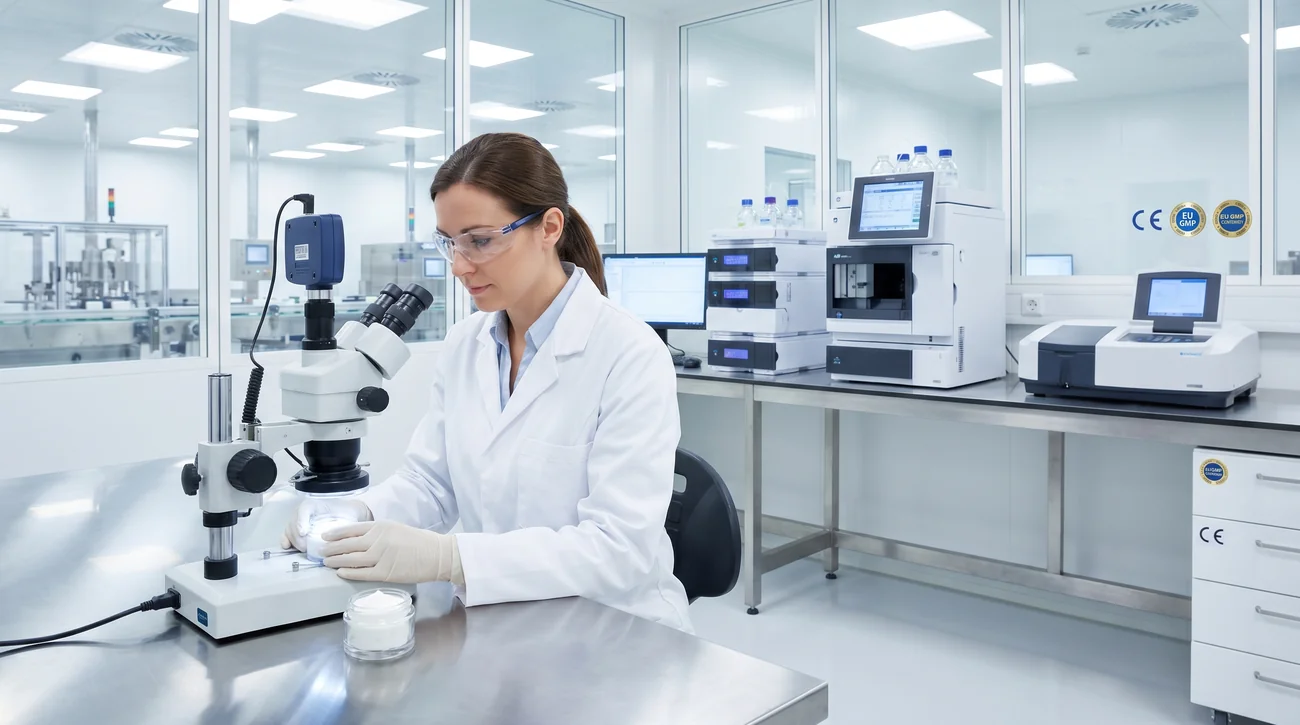
Ingredient Traceability and Transparency
EU manufacturers operate within a supply chain traceability framework. Every ingredient must be documented, its supplier, batch number, Certificate of Analysis, and compliance status under EC 1223/2009. This documentation is maintained as part of the Product Information File (PIF), which must be available to regulatory authorities on request.
For brands, this matters because end consumers and retail buyers are increasingly requesting ingredient transparency. If a retailer asks for your full ingredient sourcing documentation, your EU manufacturer already holds it. If a market authority requests your PIF for import clearance, it exists and is structured to regulatory standards. This level of documentation is not standard in all manufacturing regions.
Export Documentation Included as Standard
One practical advantage that brands discover when they source cosmetics from Europe is the documentation package that comes with each shipment. Reputable EU manufacturers provide as standard:
- Certificate of Analysis (COA): batch-specific testing results confirming the product meets its specification.
- Safety Data Sheet (MSDS/SDS): required for customs classification and import clearance in most markets.
- Free Sale Certificate: confirms the product is legally manufactured and sold in the EU, required for import registration in many markets including the Gulf, Southeast Asia, and parts of Latin America.
- GMP Certificate: confirms manufacturing under ISO 22716, increasingly required for US and Australian import compliance.
These documents are not extras; they are part of what you pay for when you source cosmetics from Europe from a legitimate manufacturer. They are what allow you to clear customs in markets that have documentation requirements, and they are what gives your product credibility with regulated distribution channels.
European vs. Asian Cosmetics Manufacturers: A Realistic Comparison
The decision to source cosmetics from Europe versus Asia is not a simple cost comparison. Here is a realistic breakdown of the key differences:
- Regulatory compliance: EU manufacturers operate under EC 1223/2009 and mandatory GMP. Asian manufacturers operate under varying national regulations, some of which permit ingredients restricted in the EU, US, and UK.
- Documentation: EU manufacturers produce full PIFs, COAs, and Free Sale Certificates as part of standard operation. Documentation standards vary significantly among Asian manufacturers.
- MOQ: Many European manufacturers operate at MOQ 1,000 units, comparable to or lower than reputable Asian OEM manufacturers for branded private label.
- Lead times: EU shipping to the US, UK, or Australia is 5–15 days by air. Comparable to Southeast Asia, faster than China for air; longer by sea but with better documentation.
- Unit cost: European manufacturing typically costs 10–30% more per unit than Asian alternatives at equivalent volumes. The gap narrows significantly when documentation, compliance, and import failure risk are factored in.
For brands positioning in the premium, clean beauty, or health-conscious segment, where “EU-made” is part of the product story, the unit cost premium is often justified and recoverable through retail pricing.
The “EU-Made” Premium Signal for Your Brand
“EU-made” functions in the global cosmetics market similarly to “Made in Germany” in automotive or “Made in Italy” in fashion. It signals a quality standard, a regulatory environment, and a production tradition that has measurable value in consumer perception, particularly in the US, UK, Gulf, and Australian markets.
Survey data consistently shows that consumers in premium segments are willing to pay more for products manufactured in the EU, and that “European formulation” is a meaningful purchase signal in the skincare and haircare categories. For brands building long-term equity, the manufacturing origin is part of the brand asset, not just a logistics decision.
How to Start Working with a European Cosmetics Manufacturer
The process of sourcing cosmetics from Europe is straightforward. You submit a product brief, receive a quotation, approve samples, and move to production. Most reputable EU manufacturers offer both white label (adapting existing formulas, 1–2 weeks to sample) and custom OEM formulation (4–8 weeks to first prototype). Minimum order quantities typically start at 1,000 units per product, making European manufacturing accessible to smaller brands and startups, not just large companies.
Cosmetic Lab is an EU-certified cosmetics manufacturer based in Riga, Latvia, operating since 2005 with export to 20+ countries. We provide full export documentation, DDP delivery options, and support for brands entering the US, UK, Australian, and Gulf markets. Our formulation development services and white label catalogue cover skincare, haircare, bath and body, solid cosmetics, and specialist formats. Contract manufacturing and private label are available from MOQ 1,000 units.
Frequently Asked Questions
Is it more expensive to source cosmetics from Europe than from China?
Unit costs at equivalent volumes are typically 10–30% higher for European manufacturing. However, the comparison should include documentation costs, import compliance risk, and return logistics if a shipment fails to meet import standards. For brands selling in premium channels or positioning on clean beauty credentials, the retail pricing premium typically offsets the manufacturing cost difference.
Do EU-manufactured cosmetics comply with US FDA requirements?
EU-manufactured cosmetics comply with EC 1223/2009, which is more stringent than current US FDA requirements in most areas. Under MoCRA (Modernization of Cosmetics Regulation Act, 2022), US importers must register their facilities and maintain safety substantiation. EU manufacturers operating under GMP and with full PIFs and COAs are well-positioned to meet these requirements. Your manufacturer should be able to provide the documentation needed for MoCRA compliance.
What is the minimum order when sourcing cosmetics from a European manufacturer?
MOQ varies by manufacturer and product type. When you source cosmetics from Europe, many manufacturers, including Cosmetic Lab, offer MOQ from 1,000 units per product for both white label and custom OEM formulations. This is comparable to reputable manufacturers in other regions and makes European manufacturing viable for startups and small brands, not only large buyers.
Can a European manufacturer ship directly to my country?
Yes. Reputable EU cosmetics manufacturers export globally and can arrange DDP (Delivered Duty Paid) shipping to the US, UK, Australia, Canada, the Gulf region, and other markets. They provide all required export documentation (COA, MSDS, Free Sale Certificate, GMP Certificate) to support import clearance in your market.
Looking to source cosmetics from Europe for your brand? Contact Cosmetic Lab below; we respond to enquiries within 2 business days with a preliminary quotation and sample plan. You can also review our full certifications page for details on our COSMOS, NATRUE, ISO 9001, and GMP standards.
Further reading: How to Import Cosmetics from Europe: Step-by-Step Guide | White Label vs Private Label vs OEM Cosmetics
Importing cosmetics from Europe is simpler than most brands outside the EU expect. If you are based in the US, UK, Australia, Canada, or the Gulf region and want to source private label cosmetics from Europe (whether white label, custom OEM, or branded private label) this guide covers the process step by step: from finding a manufacturer to clearing customs and getting your product to market.
Table of Contents
Step 1: Find and Qualify a European Cosmetics Manufacturer
The first step when sourcing private label cosmetics from Europe is qualifying a manufacturer. The key criteria to verify:
- GMP certification (ISO 22716): mandatory for EU manufacturers: ask for the certificate.
- Export experience: has the manufacturer shipped to your target market before? Ask for the markets they have exported to and what documentation they provide.
- Product range match: does the manufacturer produce the product category you need: skincare, haircare, bath, solid cosmetics, organic-certified?
- MOQ alignment: confirm minimum order quantities before investing in samples. EU manufacturers typically offer MOQ from 1,000 units per SKU.
Step 2: Request Samples and Approve Formulas
Once you have identified a manufacturer, the next step is sampling. For white label products (adapting an existing formula with your branding), a sample can typically be ready within one to two weeks. For custom OEM formulation from scratch, allow 4–8 weeks for the first prototype; this covers ingredient sourcing, development, and initial stability assessment.
Sample evaluation should cover: texture, fragrance, colour, stability under typical transport and storage conditions, and, if you are targeting specific claims, performance testing. Once the sample is approved, you proceed to production order.
Step 3: Production and Export Documentation
After sample approval, production is confirmed with a purchase order and deposit. Lead times for production runs typically range from 4–8 weeks depending on volume, formula complexity, and packaging lead times. During this phase, your manufacturer should be preparing the export documentation package that you will need to import cosmetics from Europe into your target market.
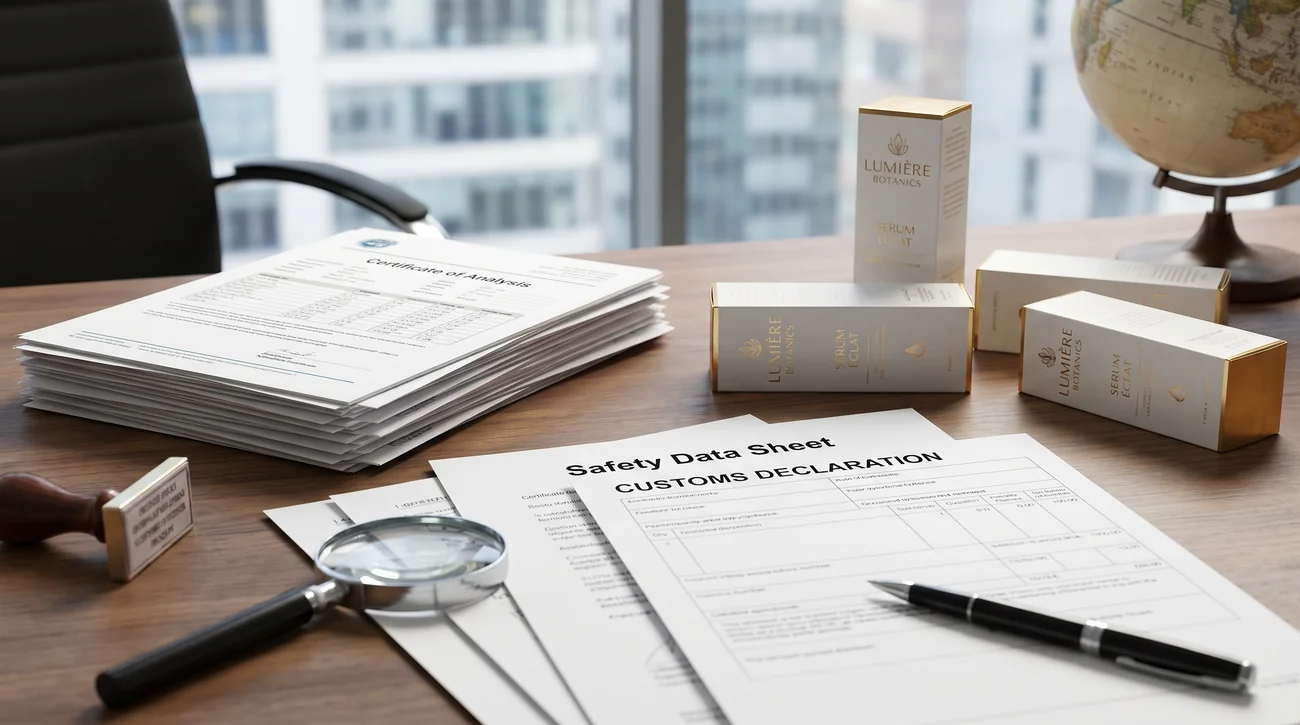
The standard documentation package from a reputable EU manufacturer includes:
- Certificate of Analysis (COA): batch-specific test results confirming the finished product meets its specification for appearance, pH, viscosity, microbial limits, and other relevant parameters.
- Safety Data Sheet (SDS/MSDS): required for customs classification in most markets. Classifies the product for transport and storage safety.
- Free Sale Certificate: issued by the relevant EU authority, confirms the product is legally manufactured and freely sold in the EU. Required for import registration in Gulf markets (GCC), many Southeast Asian markets, and parts of Latin America.
- GMP Certificate: confirms manufacturing under ISO 22716. Required or strongly recommended for import clearance in the US, Australia, and increasingly in the UK post-Brexit.
- Full ingredient list (INCI): required on product labelling in all major markets; your manufacturer should provide the correctly formatted INCI list.
Importing to the United States
To import private label cosmetics from Europe into the US, the primary regulatory framework is the FDA Modernization of Cosmetics Regulation Act (MoCRA), which came into effect in December 2022. Key requirements:
- Facility registration: cosmetic manufacturers and facilities that manufacture or process cosmetics for US sale must be registered with the FDA. Your EU manufacturer should already be registered or willing to register if they export to the US.
- Product listing: products must be listed with the FDA under MoCRA. Your EU manufacturer can support this with the required formula and ingredient information.
- Safety substantiation: you must maintain safety substantiation for your product. A EU-manufactured product with a full Product Information File, COA, and safety assessment already satisfies this requirement in practice.
- Customs clearance: cosmetics enter the US under HTS codes 3303–3307. No pre-market approval is required: the product is cleared by customs based on the invoice, packing list, INCI ingredient list, and SDS. Duty rates are typically 0–5%.
Importing to the United Kingdom
Post-Brexit, the UK operates its own cosmetics regulatory framework, UK Regulation (EC) No 1223/2009 as retained in UK law, which closely mirrors the EU framework. To import private label cosmetics from Europe into the UK:
- You need a UK Responsible Person: a UK-based entity legally responsible for the product on the UK market. If you are based in the UK, you are the Responsible Person. If you are importing for a UK client, you take on this role.
- Products must be notified via the UK’s SCPN portal (UK equivalent of the EU’s CPNP notification system).
- Labelling must comply with UK requirements: “GB address” on packaging, UK-specific statutory language.
- Import duty on cosmetics from the EU into the UK is generally 0% under the UK-EU Trade and Cooperation Agreement, provided the goods meet Rules of Origin requirements (EU-manufactured products typically qualify).
Importing to Australia
Australia regulates cosmetics under the TGA (Therapeutic Goods Administration) for products making therapeutic claims and the AICIS (Australian Industrial Chemicals Introduction Scheme) for standard cosmetics. To import cosmetics from Europe into Australia:
- Standard cosmetics (no therapeutic claims) are generally unrestricted for import. The product must comply with Australian ingredient restrictions and labelling requirements.
- AICIS registration may be required for new chemical ingredients not already listed in Australia. EU-formulated products using approved EU ingredients are typically compliant.
- Labelling must comply with Australian Consumer Law: ingredient list (INCI), country of origin statement, responsible entity address (Australian).
- Customs duty on cosmetics from Europe into Australia is 0% under the Australia-EU free trade agreement provisions.
Importing to Canada
Canada regulates cosmetics under Health Canada’s Cosmetic Regulations (under the Food and Drugs Act). To import cosmetics from Europe into Canada:
- Cosmetics must be notified to Health Canada within 10 days of first sale. Notification requires the product name, manufacturer details, and full ingredient list.
- Ingredients must comply with Canada’s Cosmetic Ingredient Hotlist (restricted/prohibited substances). EU-formulated products are generally compliant, though a few EU-permitted ingredients are restricted in Canada.
- Bilingual labelling (English and French) is required for retail products.
- Import duty under CETA (Comprehensive Economic and Trade Agreement between Canada and the EU) is 0% for most cosmetic categories.
How Cosmetic Lab Supports the Import Process
Cosmetic Lab is an EU-certified cosmetics manufacturer based in Riga, Latvia, and one of the leading sources for private label cosmetics from Europe. We have been exporting to 20+ countries since 2005 and have experience supporting clients through the import process in the US, UK, Australia, Canada, and the Gulf region. When you source private label cosmetics from Europe through Cosmetic Lab, we provide:
- Complete export documentation (COA, MSDS, Free Sale Certificate, GMP Certificate, INCI list) as standard with every shipment.
- DDP (Delivered Duty Paid) shipping options: we handle the logistics and customs export from Latvia.
- Guidance on labelling requirements for your target market: we can produce labels to US, UK, Australian, or GCC specifications.
- White label (sample in 1 week) and custom OEM formulation (4–8 weeks to first prototype), MOQ from 1,000 units.
- Product range across skincare, haircare, bath and body, white label cosmetics, solid cosmetics, and specialist formats including animal care and men’s grooming.
Frequently Asked Questions
Do I need a licence to import cosmetics from Europe?
In most markets (US, UK, Australia, Canada), no import licence is required for standard cosmetics. You need to comply with the labelling, notification, and ingredient regulations of your target market, but there is no pre-market approval or import permit required. The Gulf markets (GCC) are an exception: product registration with the local health authority is typically required before import.
What documents do I need to import cosmetics from Europe?
The standard documentation to import private label cosmetics from Europe includes: commercial invoice, packing list, Certificate of Analysis (COA), Safety Data Sheet (SDS/MSDS), full INCI ingredient list, and, for markets that require it, a Free Sale Certificate and GMP Certificate. A reputable EU manufacturer provides all of these as standard.
How long does shipping take from Europe to the US, UK, or Australia?
Air freight from Latvia (or the EU generally) to the US, UK, or Australia typically takes 5–10 business days. Sea freight takes 15–35 days depending on the destination. For initial orders and time-sensitive launches, most brands use air freight. For larger repeat orders, sea freight is significantly more cost-effective.
What are the customs duties on cosmetics imported from Europe?
Duty rates vary by market and product classification. Under current trade agreements, EU cosmetics typically attract 0% duty in the UK (UK-EU TCA), Canada (CETA), and Australia. US import duties on cosmetics range from 0–5% depending on HTS classification. Gulf markets vary. UAE applies a 5% standard import duty on most cosmetics. Your freight forwarder can provide the correct HTS classification and duty calculation for your shipment.
Ready to source private label cosmetics from Europe? Contact Cosmetic Lab below; we will respond within 2 business days with product options, pricing, and a sample timeline for your market.
Further reading: Why Source Your Cosmetics from a European Manufacturer | White Label vs Private Label vs OEM Cosmetics | Our Certifications: ISO 22716, COSMOS, NATRUE