Cosmetics Contract Manufacturer: EU-Certified, Full-Cycle Production
A cosmetics contract manufacturer takes full responsibility for producing a beauty or skincare product from beginning to end, covering formulation, filling, packaging, quality testing, and export documentation. For brands that want a product developed and produced to their exact specification, with complete ownership of the resulting formula, contract manufacturing is the model of choice. At Cosmetic Lab, we have operated as a full-cycle cosmetics contract manufacturer from Riga, Latvia since 2005, producing finished cosmetics for brands in 20+ countries across Europe, the Middle East, Asia, and beyond.
This guide explains how cosmetics contract manufacturing works, what to expect from the production process, and how Cosmetic Lab’s EU-certified facility, in-house R&D team, and export expertise support brands from initial formulation to shelf-ready delivery. For brands that prefer working from an existing formula catalogue, we also offer white label cosmetics with a library of 3,000+ ready-made formulations.
Table of Contents
What Is Cosmetics Contract Manufacturing?
Contract Manufacturing vs White Label vs Private Label
These three terms are often used interchangeably, but they describe different production models. A cosmetics contract manufacturer, also operating under the OEM (Original Equipment Manufacturing) model, develops a formula specifically for your brand. You commission the formulation, it is produced exclusively for you, and the intellectual property belongs to your business. No other brand can purchase the same formula.
White label manufacturing uses existing, pre-developed formulas from the manufacturer’s catalogue. You select a formula, brand it as your own, and bring it to market. Private label manufacturing covers both approaches, the term broadly describes any arrangement where a manufacturer produces products that a brand sells under its own name. For brands that need a unique, proprietary product, a cosmetics contract manufacturer is the right partner.
When OEM Contract Manufacturing Is the Right Choice
Working with a cosmetics contract manufacturer is the right model when your brand requires a distinctive product that competitors cannot source. This includes brands building around a proprietary active ingredient concentration, a specific texture or delivery system, a formulation developed with particular claims in mind, or a product designed to meet the regulatory requirements of a specific market. It is also the appropriate route when you have existing formula specifications from a previous manufacturer and are looking to transfer production.
Full-Cycle Contract Manufacturing at Cosmetic Lab
From Briefing to Finished Product
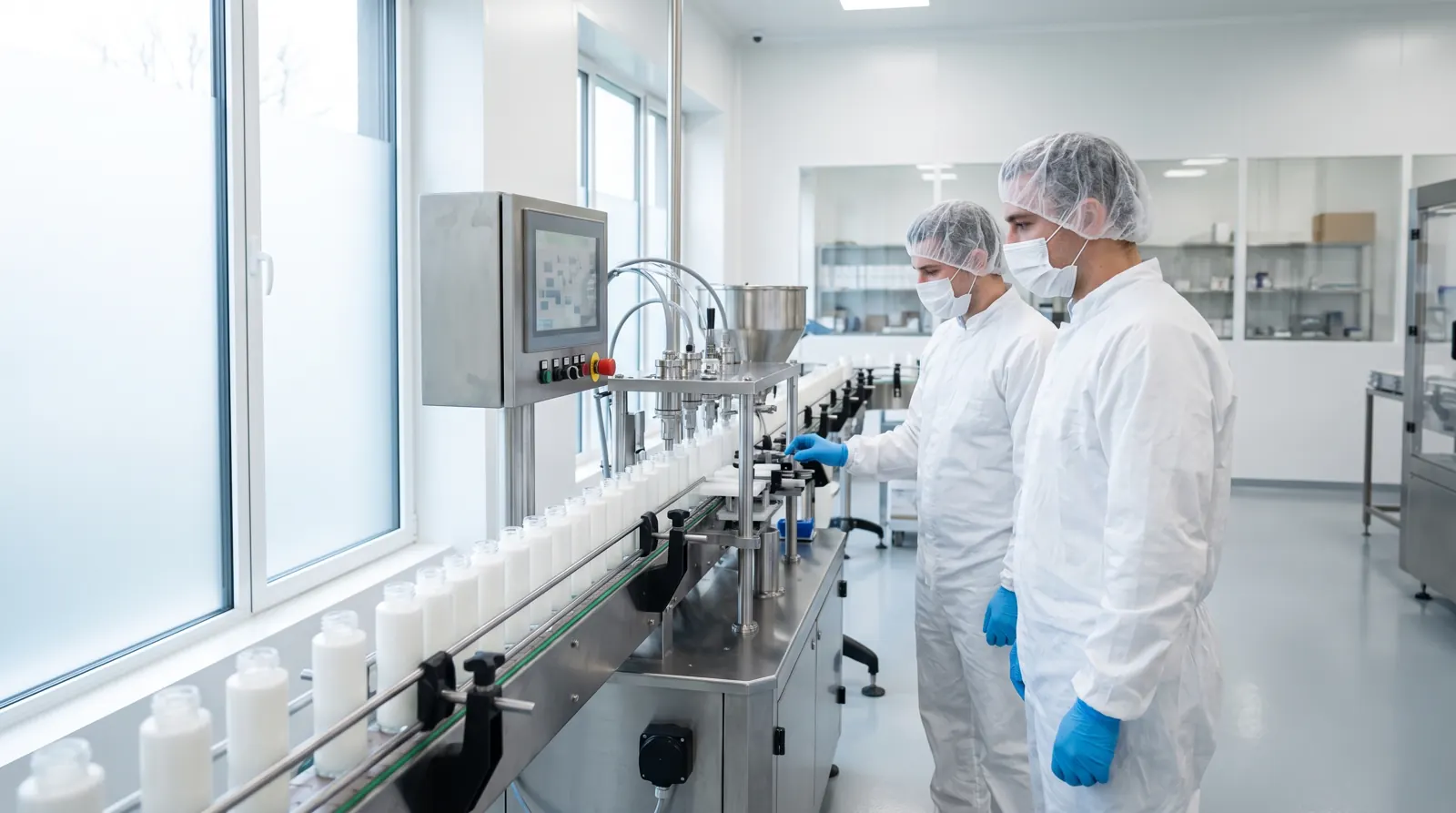
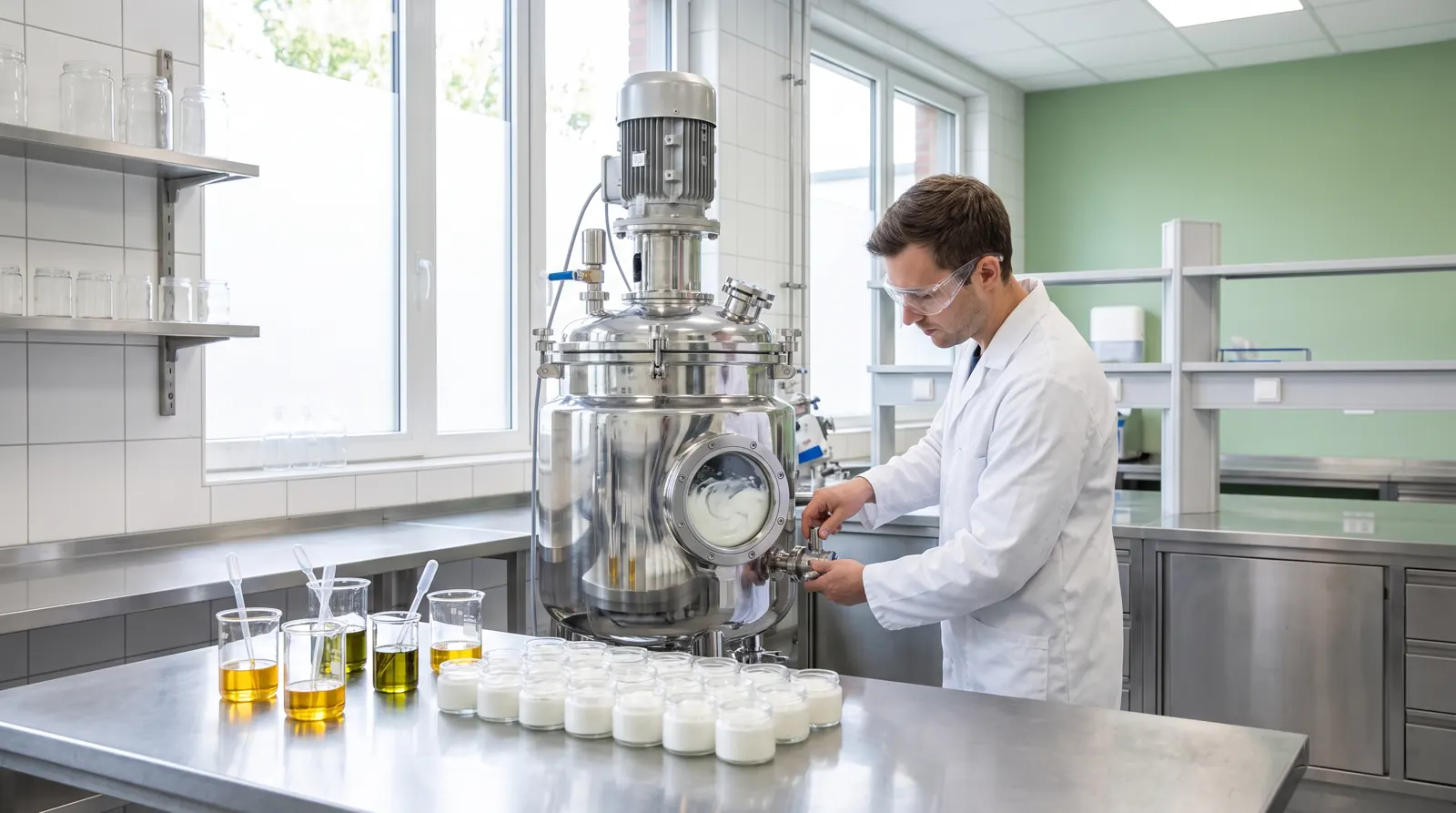
Cosmetic Lab manages the entire production cycle in-house. When a contract manufacturing project begins, our R&D team works from your brief (target texture, actives, claims, regulatory market, and any existing reference formulas) to develop a formulation that meets your specification. Development typically takes 4–8 weeks, followed by stability testing. Once the formula is approved, full batch production proceeds with in-process quality checks at each stage of filling and packaging.
In-House Capabilities
Every stage of production is handled within our Riga facility. Our capabilities include:
- Formulation & R&D: In-house chemists developing emulsions, serums, gels, balms, powders, and colour cosmetics.
- Filling & production: Automated and semi-automated filling lines for liquids, creams, and tubes across a range of viscosities.
- Packaging sourcing: Primary and secondary packaging procurement coordinated with your artwork and label compliance requirements.
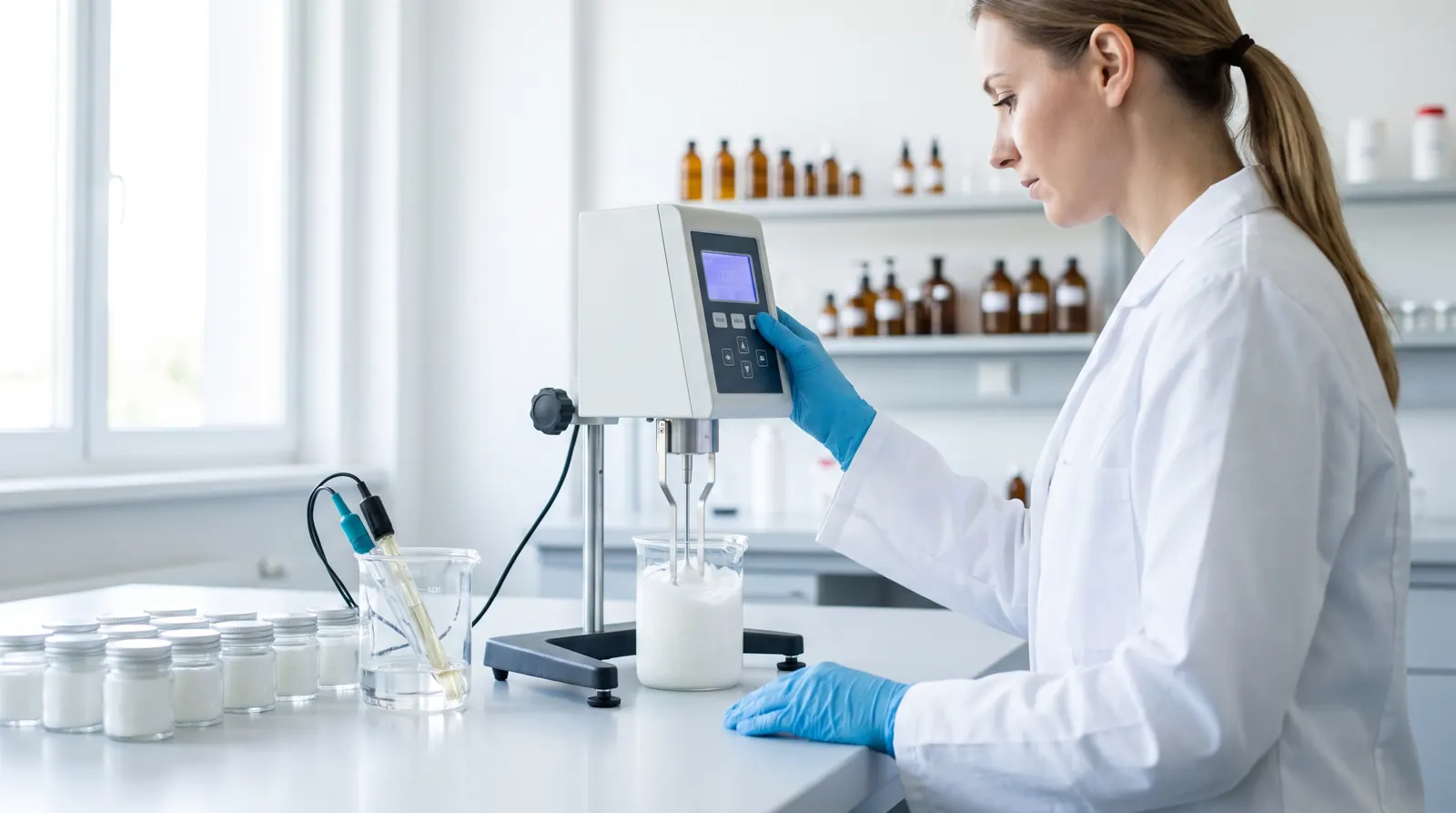
- Quality control: In-process and final QC with a Certificate of Analysis (COA) issued for every batch.
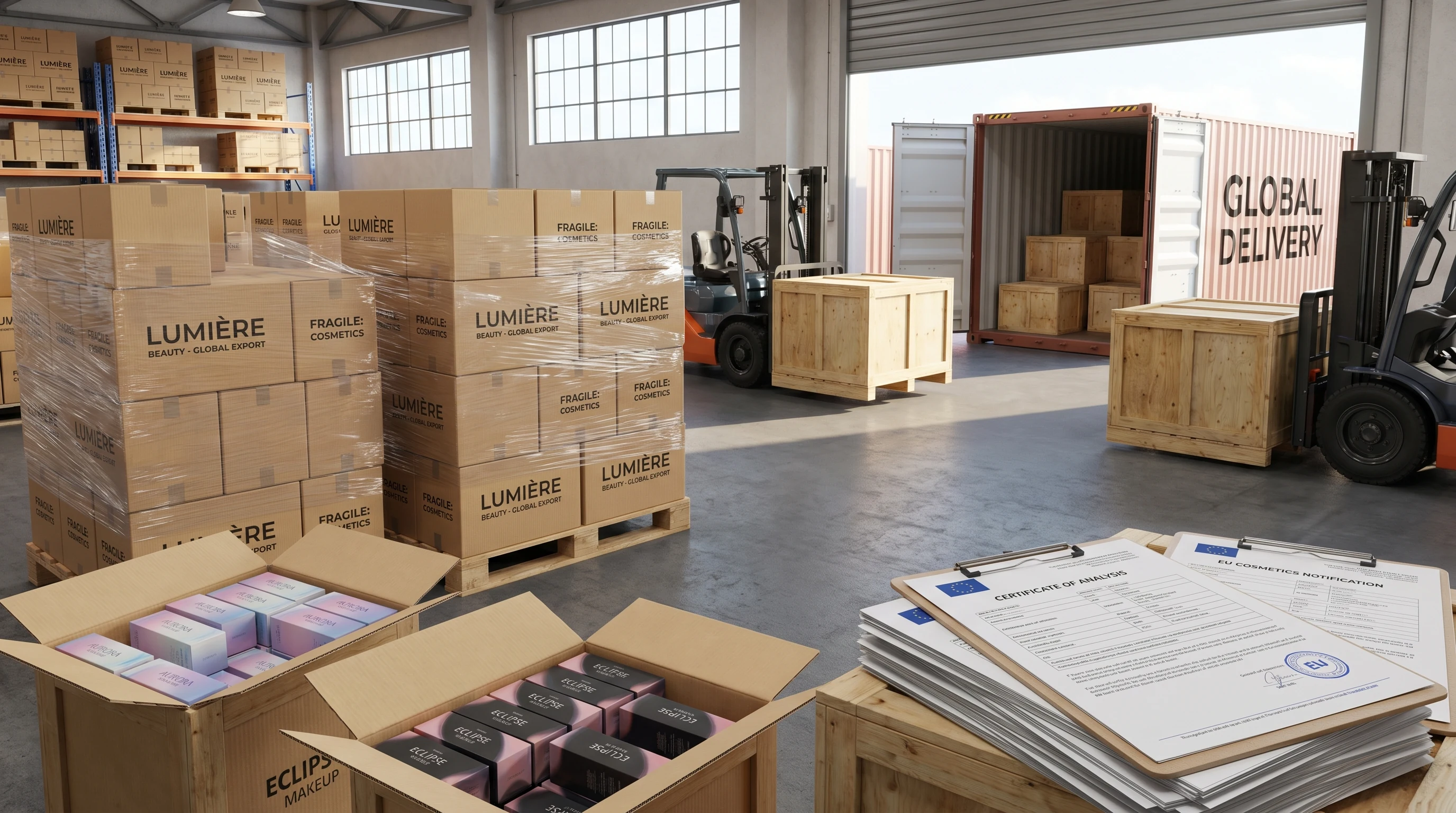
- Export documentation: COA, MSDS/SDS, Free Sale Certificate, and Product Information File prepared for every shipment.
Quality Assurance and EU GMP Compliance
ISO 22716 GMP Certification
As a cosmetics contract manufacturer operating under EU regulation, Cosmetic Lab holds ISO 22716 GMP certification, the internationally recognised Good Manufacturing Practice standard for cosmetics production. This covers raw material qualification, manufacturing hygiene, equipment validation, batch traceability, and finished product release testing. For brands distributing to markets in Asia, the Middle East, and the Americas, ISO 22716 GMP certification from an EU manufacturer is a significant advantage in the registration and import approval process.
Safety Assessment and Regulatory Documentation
Every formula placed on the EU market requires a Product Information File (PIF) containing a cosmetic safety assessment, stability data, microbiological testing results, and full INCI ingredient declaration, as required under the EU Cosmetics Regulation EC 1223/2009. Cosmetic Lab prepares or supports the preparation of all PIF components as part of the contract manufacturing service. For export markets, we provide the Free Sale Certificate, MSDS/SDS, and COA needed to register products with local regulators. More on our global shipping capabilities is covered on our EU Cosmetics Manufacturer Worldwide page.
OEM Project Timelines and Minimum Order Quantities
Typical Project Timeline
A typical OEM project at Cosmetic Lab runs as follows:
- Briefing and quotation: 2–3 business days from initial enquiry.
- Formula development: 4–8 weeks. First prototype submitted for your approval.
- Stability and safety testing: Runs concurrently with your review. Standard accelerated stability: 4–8 weeks.
- Packaging sourcing and artwork review: 2–4 weeks.
- Batch production and QC: 2–4 weeks.
- Export documentation and dispatch: 1–2 weeks.
Total OEM project timeline: typically 12–20 weeks from brief to delivery. Brands that need faster market entry should consider our white label cosmetics service with a 4–6 week lead time from existing formulas.
Minimum Order Quantities and Production Scale
The minimum order quantity for contract manufacturing at Cosmetic Lab is 500 units per product. This MOQ makes it practical for brands to launch a new formula without committing to large initial stock, while our production capacity accommodates scaling as your order volumes grow.
How to Start a Contract Manufacturing Project
Steps to Get Started
- Submit your brief: Share your product concept, target market, preferred actives, regulatory requirements, and quantity needs. We respond within 2 business days.
- Formula development: Our R&D team develops a prototype based on your brief. You receive a sample for evaluation and feedback.
- Packaging and artwork: Select packaging formats and submit your artwork. Our team reviews label compliance for your target market.
- Production: Full batch production with in-process QC. Certificate of Analysis issued on batch completion.
- Export and delivery: Full documentation package prepared. DDP shipping available for many markets on request.
If you are looking for a reliable cosmetics contract manufacturer based in the EU, contact our team to discuss your project and receive a tailored proposal.
Product Categories for Contract Manufacturing
Cosmetic Lab operates as a cosmetics contract manufacturer across the full range of leave-on and rinse-off product categories. Each category is produced within our GMP ISO 22716 certified facility using in-house R&D, stability-tested formulations, and full regulatory documentation for the intended market.
Skincare
Face creams and moisturisers, serums and facial oils, cleansers and toners, eye creams, exfoliating treatments, clay masks, sheet masks, and SPF formulations. We formulate for all skin types and for targeted claims including anti-ageing, brightening, barrier repair, and acne-prone skin. Active ingredient concentrations are determined by brief and market regulation. COSMOS Organic certified skincare formulation is available on request.
Haircare
Shampoos and conditioners, hair masks and treatments, scalp serums, leave-in conditioners, hair oils, and styling formulations. Available for all hair types: fine, oily, dry, colour-treated, curly, and chemically processed. Solid shampoo bars and solid conditioner bars are a core specialisation: plastic-free, travel-compliant formats with high consumer appeal in European and North American markets.
Body & Bath Care
Body lotions and butters, body oils, shower gels, bath salts and soaks, hand and foot creams, body scrubs, and deodorant formulations, both conventional and natural aluminium-free variants. Solid body butter bars and zero-waste bath formats are available as part of our solid cosmetics specialisation.
Solid Cosmetics
Anhydrous (waterless) solid cosmetics are one of Cosmetic Lab’s strongest development areas. Our R&D team formulates solid shampoo bars, solid conditioners, solid facial cleansers, shaving bars, and solid body butters. These formats typically have a longer shelf life than their liquid equivalents, require no preservative systems, and are fully compatible with COSMOS Natural and COSMOS Organic certification. Brands in the sustainability and refillable packaging segments frequently choose solid formats as their primary product range.
Spa, Gift, & Hospitality Collections
Multi-product collections developed for wellness brands, hotel amenity programmes, and gifting retail. We coordinate formulation, primary packaging, secondary packaging, and set assembly. Bespoke fragrance development is available for brands building a signature scent across a product range. Collections can be produced with COSMOS Organic certification where required by the hotel or retailer.
Formula Transfer: Switching from Another Manufacturer
Brands that are already producing cosmetics but are switching manufacturers are one of the most common client types at Cosmetic Lab. Formula transfer projects involve taking an existing approved formula (with its full specification, stability data, and safety assessment) and reproducing it at our facility to an equivalent or better quality standard.
Common reasons for switching to a cosmetics contract manufacturer in the EU include: the previous manufacturer was located outside the EU and export documentation did not satisfy UK, US, or Australian customs requirements; quality consistency declined over production runs; the original manufacturer stopped production of a category; or the brand is scaling and needs a manufacturer with higher capacity and more robust quality systems.
For transfer projects, our R&D team requests the existing formula specification and any available safety or stability data. We produce a benchmark batch for side-by-side comparison against the original. In most cases, transfer projects reach approved benchmark quality within one to two development iterations. Once approved, full-scale production proceeds under our GMP quality systems with a new Certificate of Analysis and Product Information File.
Regulatory Compliance by Target Market
One of the practical advantages of working with an EU-based cosmetics contract manufacturer is that EU Cosmetics Regulation (EC 1223/2009) is one of the world’s strictest regulatory frameworks. Products formulated and tested to EU standards typically meet or exceed the requirements of most major international markets. Below is a summary of the key regulatory considerations for brands importing finished products from our facility.
United States: MoCRA
The Modernization of Cosmetics Regulation Act (MoCRA), which came into force in 2023, requires that cosmetics sold in the US meet updated safety substantiation, labelling, and facility registration requirements. Cosmetic Lab’s EU GMP certification and in-house safety assessment processes align closely with MoCRA requirements. For US-bound products, we prepare a full Safety Assessment, Certificate of Analysis, and Ingredient Declaration in US INCI format. Brands are advised to register their facility and products with the FDA’s VCRP database, we provide all technical documentation needed for this process.
United Kingdom: UK Cosmetics Regulation
Post-Brexit, the UK operates its own Cosmetics Regulation (retained EU law, updated via OPSS). Products exported from our EU facility to the UK require a UK Responsible Person. We supply a full Product Information File and Certificate of Free Sale for every UK-bound shipment. The UK maintains its own ingredient prohibited list, which closely mirrors the EU list. We advise brands on any divergence relevant to their formulation on a project-by-project basis.
Australia: TGA & AICIS
Cosmetics imported into Australia must comply with the Australian Industrial Chemicals Introduction Scheme (AICIS) and, for any therapeutic claims, the TGA. Our export documentation package includes a Certificate of Analysis, MSDS/SDS, and Free Sale Certificate, the standard set required by Australian border control. For products with therapeutic or sunscreen claims, we advise on the additional TGA registration process and adjust the formulation documentation accordingly.
Gulf Cooperation Council (GCC)
GCC markets (UAE, Saudi Arabia, Kuwait, Qatar, Bahrain, Oman) apply the GCC Standardisation Organisation’s cosmetics regulation, which is closely aligned with the EU framework. Cosmetic Lab has experience exporting to GCC markets and prepares export documentation accordingly, including Arabic INCI labelling guidance and halal-compatible formulation options for brands targeting this segment.
Frequently Asked Questions
What does a cosmetics contract manufacturer do?
A cosmetics contract manufacturer develops and produces beauty and personal care products to a brand’s specification. The manufacturer handles formulation, filling, packaging, quality testing, and export documentation. The brand owns the resulting formula as intellectual property. This is distinct from white label manufacturing, where the brand selects from the manufacturer’s existing formula catalogue.
What is the minimum order for a cosmetics contract manufacturer?
At Cosmetic Lab, the minimum order quantity is 500 units per product for both custom OEM formulations and white label products. This allows brands to manage initial investment while testing market demand before scaling production.
How long does a cosmetics contract manufacturer take to deliver?
A full OEM project typically takes 12–20 weeks from brief to dispatch, covering formula development (4–8 weeks), stability testing, packaging, batch production, and export documentation. Brands working from our existing formula library can expect a 4–6 week lead time. A detailed project timeline is provided at the quotation stage.
Can a cosmetics contract manufacturer produce for export worldwide?
Yes. As an EU-based cosmetics contract manufacturer, Cosmetic Lab exports finished products to 20+ countries, including markets across Europe, the Middle East, Southeast Asia, and Central Asia. Every shipment includes a full export documentation package. Our team provides market-specific compliance guidance for import registration in target markets. Full details are on our EU Cosmetics Export page.
Why Choose Cosmetic Lab as Your Cosmetics Contract Manufacturer
With over 20 years of manufacturing experience and clients in 20+ countries, Cosmetic Lab provides EU-certified contract manufacturing with genuine in-house R&D and export coordination. Our team of chemists, regulatory specialists, and export coordinators manages the full project from brief to delivery.
- Operating since 2005 from Riga, Latvia (EU)
- ISO 22716 GMP-certified production facility
- Full in-house R&D: formulation to finished product
- MOQ from 500 units per product
- Export documentation for 20+ countries worldwide
- COSMOS Organic and NATRUE certification support available
For more details on our full range of manufacturing services, explore our Private Label Manufacturing, White Label Cosmetics, Custom Formulation Services, and EU Cosmetics Export & Worldwide Shipping, and Certifications pages. Also read: Why Source Your Cosmetics from a European Manufacturer, How to Import Cosmetics from Europe, and White Label vs Private Label vs OEM Cosmetics.